

Cultural guide to doing business in Dubai: etiquette and relationships
Hierarchy and relationships shape how business decisions are made in the UAE. Senior leaders usually have the final say, and decisions are rarely reached quickly or in the meeting where they are discussed. A practical cultural guide to doing business in Dubai starts with understanding that progress depends not only on your proposal, but also on how you communicate and build trust.
It’s easy to assume a clear presentation and strong commercial case will move everything forward. They matter, but so do patience, respectful communication and the ability to navigate different cultural expectations in Dubai’s diverse business environment.
Whether you are expanding operations or advising clients from our offices across the UK, this guide explains how hierarchy influences decisions, what to expect in meetings and conversations, and how relationships, business entertaining and local working practices shape collaboration. At Ventureprise Acquisitions, we help organisations navigate these international landscapes with confidence. Use these practical approaches to engage partners, avoid common misunderstandings and build a stronger foundation for doing business in Dubai.
Table of Contents
1. Communication styles and social norms
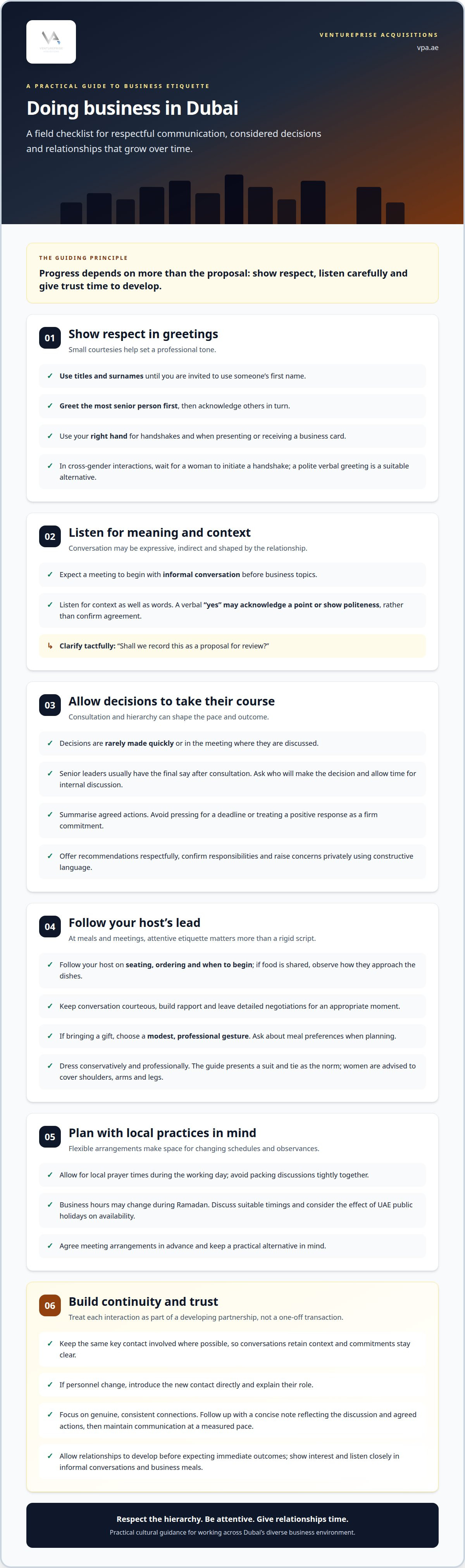
Arabic is the UAE’s official language, but English is widely used in business. Use a person’s title and surname until they invite you to use their first name. At a meeting, greet the most senior person first, then acknowledge others in turn. These practices show respect for hierarchy and help establish a professional tone.
Use your right hand for handshakes and when presenting or receiving a business card. In cross-gender interactions, wait for a woman to initiate a handshake rather than assuming one is expected. A polite verbal greeting is a suitable alternative. These small social cues matter: follow the other person’s lead and keep your manner courteous.
Expect meetings to begin with informal conversation before business topics. Communication can be expressive while still conveying meaning indirectly, so listen for context as well as words. In Emirati business communication, “yes” may acknowledge a point or show politeness rather than confirm agreement. Clarify next steps tactfully, for example: “Shall we record this as a proposal for review?”
Negotiations often require patience. Decisions are rarely made quickly or during the meeting where they are discussed, and senior leaders usually have the final say after consultation. Avoid pressing for a deadline or treating a positive response as a firm commitment. Instead, summarise agreed actions, ask who will make the decision, and allow time for internal discussion.
Hierarchy also shapes how colleagues contribute. UAE managers are generally expected to give clear instructions, while staff may hesitate to act if they think initiative could overstep authority. Offer recommendations respectfully and confirm responsibilities before moving ahead. Public criticism and direct confrontation are usually avoided to preserve team harmony. Raise concerns privately and use constructive, positive language to protect trust and reputation.
Religion plays a central role in business behaviour, so show respect for religious practices and local cultural norms. Gender norms can also affect greetings: wait for a woman to initiate a handshake. In negotiations and everyday interactions, diplomacy and careful listening help international professionals understand different perspectives, address misunderstandings and build the social awareness that supports success in the UAE.
2. What are the key etiquette rules when dining with UAE business partners?
At a business meal in Dubai, follow your host’s lead on seating, ordering and when to begin. Keep conversation courteous, and let your UAE partner guide the shift from social discussion to business. If you bring a gift, choose a modest, professional gesture and present it without making the exchange feel transactional. Avoid assuming every partner follows the same personal or religious practices. Ask about preferences when planning the meal.
Use the meal to listen and build rapport rather than press for an immediate decision. For example, discuss shared interests before raising a proposal, and leave detailed negotiations for an appropriate moment. If food is served communally, observe how your host approaches the dishes and follow their example. Good etiquette is attentive, not rigid: respond to the people at the table rather than following a strict script.
For business meetings in Dubai, dress conservatively and professionally. A suit and tie are presented as the norm for business in the Arab world, despite the heat; women are advised to wear clothing that covers their shoulders, arms and legs. Choose polished attire for a formal meeting and adapt your outfit to the setting without treating local values as a formality.
Religious practices and the calendar can affect meeting plans. Allow for local prayer times during the working day, and build flexibility into schedules rather than packing discussions tightly together. Business hours may change during Ramadan, so discuss suitable timings with your counterpart. UAE public holidays can also affect availability. Agree meeting arrangements in advance and keep a practical alternative in mind. These steps help international visitors manage negotiations respectfully without assuming English-language business practices apply unchanged in every country.
3. Relationship-building and business entertaining
In the United Arab Emirates, trust, continuity and personal connections often underpin business relationships. Treat each interaction as part of a developing partnership, not a one-off transaction. Keep the same key contact involved where possible, so conversations retain context and commitments stay clear. If personnel change, introduce the new contact directly and explain their role. This simple handover shows respect and helps prevent avoidable misunderstandings.
Build professional connections alongside commercial discussions. A broad network can help you understand Dubai’s global business environment and identify people who can offer relevant perspectives. Focus on genuine, consistent contact rather than collecting names. For example, follow up after a meeting with a concise note reflecting the discussion and agreed actions. Then maintain communication at a measured pace, rather than contacting someone only when you need a decision.
Patience matters. Long-term thinking is considered essential to success in UAE business, so allow relationships to develop before expecting immediate outcomes. Once regular business activities are established, show interest in your counterpart’s stories and listen closely. At a business meal or in an informal conversation, ask thoughtful questions and let the other person choose how much to share. This shows attention without turning personal conversation into an interrogation.
Business entertaining can create space for stronger connections, but it works best alongside reliable professional conduct. Keep promises, respond to requests and make agreed follow-ups visible. In UAE workplaces, managers may take a personal interest in team members’ well-being beyond work matters. Respond courteously while respecting each person’s boundaries. As a foreign partner, don’t assume one approach suits every colleague. Ask considerate questions, listen to different perspectives and address tensions privately. These habits help international teams build trust across cultural differences, strengthen their reputation and manage developing partnerships with greater clarity.
4. Dubai's diverse business environment
Dubai’s business environment brings together people and organisations with varied cultural expectations. The UAE has a population of approximately 10 million, and Dubai is its largest city. For international businesses, this means one approach may not fit every customer, partner or team. A cultural guide to doing business in Dubai should therefore treat cultural differences as a practical factor in decisions, not a side issue. Ask who your audience is, what they value and how they prefer to engage before shaping a proposal.
Language is one part of that assessment. Arabic is the UAE’s official language, while English is widely used for business communication. Make key marketing materials available in both languages, including brochures, presentations and business cards. Clear wording helps reduce misunderstandings, but translation alone is not enough. Review examples, images and messages for local relevance, then adapt them to the people you intend to reach.
Culture can also affect how a product is presented, how customers make decisions and what they expect from service. For example, eating preferences and social traditions may influence how a hospitality business designs its offer. A company entering a new market should identify these factors before finalising its marketing plan. Gather feedback from the intended audience, test whether the message is understood and refine the offer around their needs.
Dubai’s business week is generally Sunday to Thursday, with Friday and Saturday as the weekend; prayer times may be observed during the working day. Ramadan can change working hours, so account for local schedules when planning collaboration. These practical details help keep projects on track. The challenge is to work consistently while adapting thoughtfully to the people and markets involved. A cultural guide to doing business in Dubai can inform those choices, helping teams turn awareness into an adaptable market approach.
Building a presence in Dubai? Discuss your market strategy and how to shape your next steps.
Ventureprise Acquisitions: Setting Up A Company In Dubai: 6 Myths That Will Hold You Back
Ventureprise Acquisitions helps businesses approach market entry through Company Formation and Strategic Planning. If you’re preparing to establish a commercial presence, these services offer a practical next step alongside the cultural preparation covered here.
Use the guide, Setting Up A Company In Dubai: 6 Myths That Will Hold You Back, to challenge assumptions that could complicate your plans. Strategic planning can help you shape your approach around your business objectives and the relationships you need to develop. This is most relevant when you’re moving from researching the market to making decisions about entering it.
To discuss your plans, contact Ventureprise Acquisitions.
Turn cultural understanding into a market-entry advantage
Make cultural awareness part of your operating plan, not a last-minute adjustment. Before advancing a proposal, map the people involved, how decisions move between them and what each stakeholder needs to proceed. A cultural guide to doing business in Dubai is most valuable when its insights shape practical choices, from partnership priorities to how you present your organisation.
Set a clear internal process: assign relationship owners, record commitments after discussions and review feedback before changing course. This gives your team a consistent approach while leaving room to adapt to individual partners and local expectations. Strong preparation helps you move with purpose without mistaking a promising conversation for a completed decision.
If you’re ready to develop your plans for Dubai, contact Ventureprise Acquisitions today. Take the next step with focus, and build a foundation for confident progress.
Frequently Asked Questions
How are business decisions typically made in the UAE?
Business decisions generally follow organisational hierarchy, with senior leaders holding decision authority. To keep a proposal moving, identify the person who can approve it and learn whether others need to review it first. Send concise options with their commercial implications, then record what remains open after discussions. Treat the meeting as part of the decision process, not necessarily the point at which approval is granted.
How direct is communication in the UAE?
Communication can be expressive, but the intended message may be conveyed indirectly. Avoid treating enthusiasm or silence as a definitive position. Instead, use a neutral recap, such as, “I understand this is an option for consideration. Have I captured that correctly?” This gives your counterpart room to clarify without pressure. Follow up in writing with the proposal status and any agreed actions.
How does management style in the UAE differ from Western approaches?
Management in the UAE is generally more hierarchical than the flatter approaches familiar in some Western workplaces. Make delegation explicit: state the task, the decisions a colleague can make independently and when approval is needed. This gives people clear authority to act without unintentionally bypassing senior leaders. For a joint project, agree who owns each decision before work begins.
How formal are meetings in the UAE?
Meetings are professional, but interaction may include relationship-building alongside the agenda. Prepare a focused agenda and know which outcomes you need, while leaving room for discussion to develop. Close by confirming owners, actions and next steps aloud. A short written recap afterwards helps align participants, especially when several teams or senior stakeholders are involved.
How should disagreement or conflict be handled in the UAE?
Raise disagreement diplomatically and in private, rather than confronting a colleague in front of others. Describe the specific issue and its impact on the shared objective, then invite the other person’s view. For example, say, “The revised delivery date affects our launch plan. Could we review the options together?” Focus on a workable resolution, not assigning blame or winning the exchange.
How should international professionals approach hierarchy in the UAE?
Show respect for seniority and status by understanding who leads each discussion and who approves the outcome. Before approaching a senior decision-maker, establish the appropriate route through your main contact. Ask who should be included in a proposal review and address participants according to their roles. This avoids accidentally bypassing someone and helps direct questions, updates and requests to the right people.



Comments