

How to apply for a UAE import export license and understand Dubai costs
UAE import-export licence requirements start with a trade licence that covers the intended trading activity. A business must also register with the relevant emirate’s customs authority and obtain a customs code before moving goods across the border. In Dubai, Dubai Customs issues a unique Customs Code to registered trading companies.
Choosing the right business setup matters as much as preparing the paperwork. A mainland or free zone licence affects where the business can trade, while the goods themselves may require additional permits and approvals.
This guide explains how to apply, which documents to prepare, when extra approvals may apply, and what can affect setup costs in Dubai. It shows how the trade activity, customs registration, shipment paperwork and business location fit together, helping you plan the application and the decisions around it.
Table of Contents
Documents for licensing and customs registration
Obtain the correct trade licence and customs registration before importing or exporting. Without them, goods may not clear customs. Missing documents or incorrect HS codes can also cause delays, fines or shipment rejection.
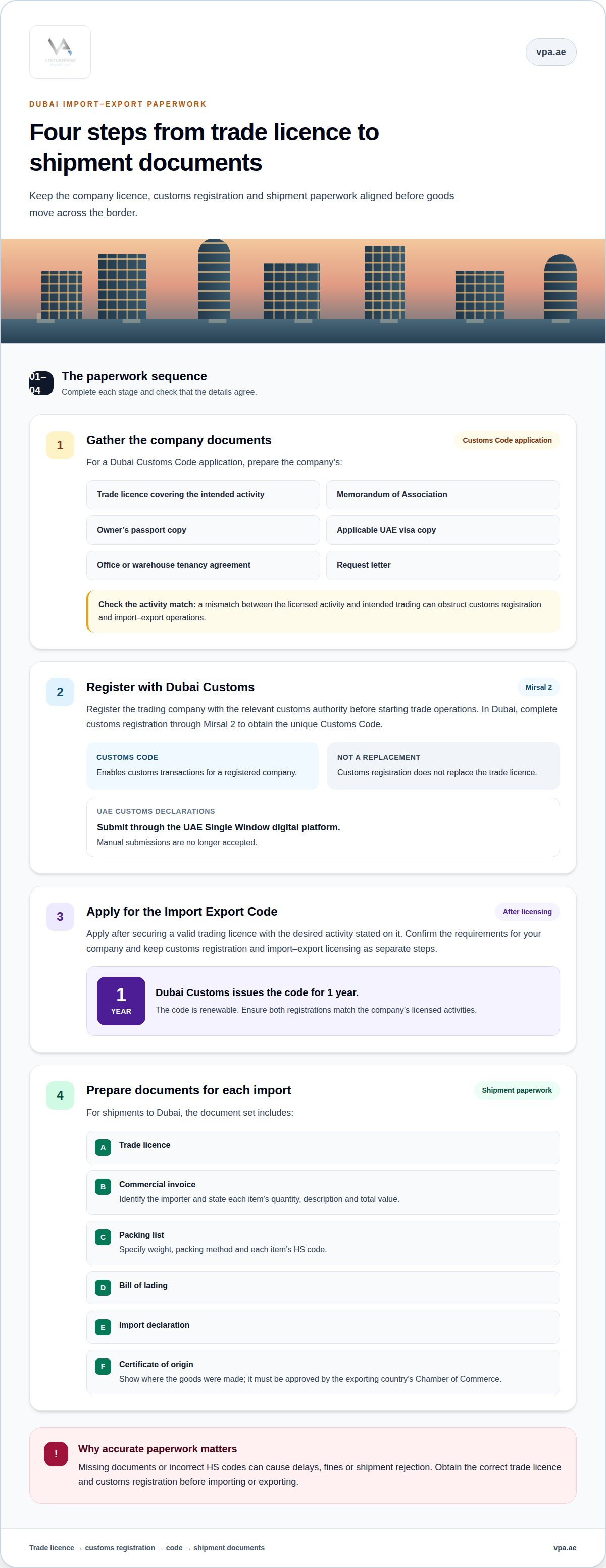
Gather trade licence documentsFor a Dubai Customs Code application, prepare the company’s trade licence and Memorandum of Association, the owner’s passport copy, an applicable UAE visa copy, an office or warehouse tenancy agreement, and a request letter. Check that the licence covers the intended trading activity. A mismatch can obstruct customs registration and import-export operations.
Register with Dubai CustomsRegister the trading company with the relevant customs authority before starting trade operations. For Dubai, complete customs registration through Mirsal 2 and obtain the unique Customs Code allocated to registered companies. The code enables customs transactions, but it does not replace the trade licence. UAE customs declarations must be submitted through the UAE Single Window digital platform; manual submissions are no longer accepted.
Apply for an Import Export Code after securing a valid trading licence with the desired activity stated on it. Dubai Customs issues the code for 1 year, and it is renewable. Treat customs registration and import-export licensing as separate steps, and confirm which requirements apply to your company. Confirm that both registrations match the company’s licensed activities.
Prepare shipment documents for each import. For shipments to Dubai, these include the trade licence, commercial invoice, packing list, bill of lading and import declaration. The invoice should identify the importer and state each item’s quantity, description and total value. Include a certificate of origin showing where the goods were made, approved by the exporting country’s Chamber of Commerce. The packing list should specify weight, packing method and each item’s HS code.
Commercial, general and specific trading activities
Plan UAE import-export licence requirements around your target markets and the activities your company will carry out. Each emirate issues trade licences through its Department of Economic Development or relevant authority. Mainland and free zone licences also differ in where the business can trade.
Choose a trading licence typeDefine the goods and export activities the company will handle, then choose a licence that covers them. One trade licence can cover both importing and exporting when both activities are selected during setup. Avoid activity descriptions that do not match your trading model. You need the appropriate activity on your licence before applying for an Import Export Code, so include the intended activities in the application.
Identify the licensing authorityApply for a trade licence through the Department of Economic Development or the relevant emirate authority. Each emirate regulates commercial activities not covered by federal legislation, so the licensing jurisdiction depends on where the company is established. Keep trade licensing separate from customs registration: the emirate authority issues the licence, while the relevant customs authority handles customs transactions.
Compare mainland and free zone requirementsChoose mainland if the business needs to trade within the UAE and internationally. A free zone licence suits international trading and re-exports, and allows imports into the zone where the company is established. Free zone businesses benefit from 100% foreign ownership, but need a distributor to trade directly in the mainland. Transfers to the mainland or another zone require customs documents, so factor the route into your setup decision.
Align the trade name, activity and operating model before applying. The name identifies the company; the activity defines the trading it is licensed to conduct. A business importing into the UAE needs the correct trade licence from the relevant emirate authority. To meet UAE import-export licence requirements for your planned market, match the licence route to your customers, goods and intended customs-clearance route.
Additional approvals for restricted or controlled goods
Before arranging logistics, classify each product and check whether its destination or status triggers extra controls. Pharmaceuticals, telecommunications equipment and foodstuffs may require additional approval.
Identify restricted or controlled goodsCheck each product’s HS code, whether it is permitted, and whether it needs a specific permit or approval before shipping. The GCC Common Customs Law provides the framework for import regulations, while each member state administers its own prohibited, restricted and exempt product lists. For re-exports, assess the destination and route as well as the goods’ status. Customs registration alone does not clear controlled cargo.
Check permit requirementsCheck whether the goods are restricted or duty exempt, as permit requirements can depend on the goods and applicable controls. Pharmaceuticals, telecommunications equipment and foodstuffs may require additional approvals from the competent authority. Recipients importing dual-use goods listed in the Nuclear Supplier Group guidelines must hold an import licence under FANR-REG-09. This requirement applies to those listed goods, not automatically to every technical product.
Obtain additional approvalsArrange product-specific documents before shipment and account for them in the logistics plan. Food imports require an original health certificate from the appropriate government agency in the exporting country, confirming the food is fit for human consumption. Meat and poultry imports also require an original Halal slaughter certificate. Food-product labels should state the country of origin. Keep each approval linked to the relevant product and consignment.
Resolve the approval route before goods leave their origin. The responsible ministry or competent agency depends on the product category, so identify the relevant authority based on the goods’ classification and applicable regulations. Check the destination’s requirements as well, since export documentation can vary by destination. A correct HS code helps identify controls; inaccurate classification can lead to delays, fines or rejection.
Import-export licence costs in Dubai
Budget for more than the trade licence. Company formation, customs registration, shipment clearance and product-specific approvals can all affect an export business’s total outlay. Compare mainland and free zone routes based on the activities and markets each must support.
Separate setup costs from shipment charges. A Dubai mainland or free zone licence authorises the business to trade; customs registration supports customs transactions. Import duties and VAT relate to goods and transactions, not simply to obtaining a licence. Keep these cost categories distinct when forecasting international trade.
Plan for the trade licence and company formation together. The selected economic activity, jurisdiction and business structure shape the setup process. If the business intends to import and export, select both activities during setup rather than treating customs clearance as permission to trade without the relevant licence. Include the location and operating model in your budget assumptions.
Budget separately for customs and shipment costs. Each shipment needs a customs declaration, and logistics paperwork supports clearance. Goods moved from a free zone to the mainland or another zone require customs documents. Restricted goods may also need permits or approvals, adding product-specific steps to the operating plan. Re-exports and goods entering the local market may receive different duty treatment.
Account for border taxes when forecasting landed costs. The UAE generally levies customs duty on imported goods at 5%; alcohol and tobacco face higher duties. VAT is 5%, introduced on 1 January 2018. Customs duty generally applies to goods entering the UAE, while goods re-exported through free zones may be exempt. The product, route and destination therefore matter.
Build a working estimate by listing licence formation, customs registration, premises, approvals, freight, duty and VAT as separate lines. Then test the estimate against the planned goods and route. To structure a Dubai setup around the intended trading activity and jurisdiction, discuss your company formation plans.
Ventureprise Acquisitions
Ventureprise Acquisitions supports entrepreneurs planning a Dubai business setup around their intended trading model. If you’re weighing mainland against free zone formation or considering how import and export activities fit your commercial strategy, its Company Formation and Strategic Planning services can help clarify the decisions.
A clear setup plan connects the company’s jurisdiction, licensed activities and target markets before operations begin. This is especially useful when your trading route involves several decisions, such as serving UAE customers while also exporting internationally. Explore Setting Up A Company In Dubai: 6 Myths That Will Hold You Back for further context on establishing a commercial presence.
Contact Ventureprise Acquisitions for help aligning your Dubai business setup with your trading plans.
Turn your Dubai trading plan into a clear next move
UAE import-export licence requirements are one part of a broader business decision: how your Dubai presence will support your commercial direction as it develops. Treat setup as a strategic foundation, not just an application. An aligned structure connects your intended activities with the markets and operating model you plan to pursue.
Before moving ahead, clarify your priorities: the customers you plan to serve, the role Dubai will play in your trading activity, and how the business may need to adapt. Ventureprise Acquisitions offers company formation and strategic planning to help shape these decisions and map a considered path from market entry to future growth.
Take the next step when you’re ready to turn your plans into action. Contact Ventureprise Acquisitions to discuss your Dubai business plans, and move forward with a clearer direction.
Frequently Asked Questions
How to Apply for Import Export License in UAE?
Apply for a commercial trade licence through the Department of Economic Development or relevant emirate authority, including the intended trading activity. Then complete customs registration in the emirate where the business will transact. For example, a company established in Dubai follows Dubai’s customs process. Allow time for any separate permits required for your goods, as these approvals are a distinct part of preparing to trade.
What types of UAE import and export licences are available, and which businesses need them?
Mainland and free zone trade licences suit different operating models. A mainland licence supports companies trading within the UAE and internationally; a free zone licence supports international trade and re-exports. Businesses importing or exporting goods need a licence covering the relevant commercial activity. For example, a company selling into the UAE mainland should account for market access when choosing its setup, rather than selecting a licence solely for overseas trading.
What documents are required to apply for a UAE import or export licence?
For company and customs registration, prepare company formation records, ownership identification and evidence of business premises. A Dubai Customs Code application includes the trade licence, Memorandum of Association, owner’s passport copy, applicable UAE visa copy, tenancy agreement and request letter. Shipment paperwork is separate: an import consignment may need invoices, origin evidence and transport documents. Keep the company application file separate from the documents for each consignment.
How much do UAE trade licences and customs registrations cost, including renewal fees?
There is no single total cost for every setup. Your budget depends on mainland or free zone formation, the selected licence and customs registration. Budget separately for recurring renewals and shipment-related charges. Customs Code renewal is an additional budget item, while duties and VAT relate to imported goods rather than company formation. For a useful forecast in pounds, itemise each authority’s charges and your planned trading route.
What are the steps and processing times to obtain a UAE import or export licence?
First choose the emirate and business jurisdiction, then select the trading activity and submit the trade licence application. After company registration, complete customs registration and arrange any goods-specific permits before shipping. Processing time follows the application sequence and depends on complete submissions and any additional approval requirements. Prepare company and ownership records together to avoid pausing the application to gather missing paperwork.
How do businesses register with UAE customs and obtain an importer or exporter code?
Register the company with the customs authority for its emirate and complete the authority’s customs registration process. Dubai businesses use Dubai Customs’ Mirsal 2 system; customs declarations are submitted digitally through the UAE Single Window. The company also needs the relevant Import Export Code for trading. Keep customs registration details aligned with the licensed company and its activity, so the code supports the intended import or export operations.



Comments