
_svg.png)
Setting Up a Family Foundation in DIFC: A Practical 2026 Guide
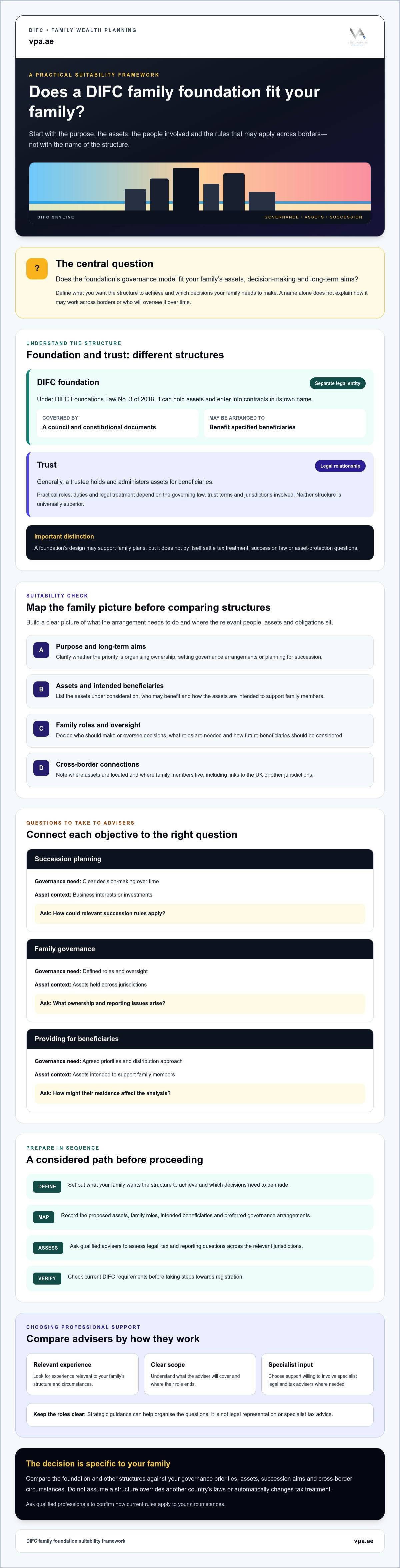
When setting up a family foundation in DIFC, the key question is whether the structure fits your family’s assets, governance priorities and succession plans. The name alone won’t tell you how it may work across borders or who will oversee it over time. Start by defining what you want the structure to achieve and which decisions your family needs to make.
This guide offers a practical framework for assessing suitability before you commit. It explains what to consider about governance, asset ownership, ongoing administration and the rules of other relevant jurisdictions. It also distinguishes a foundation from a family office, and sets out how to prepare for discussions with wealth-structuring consultants and qualified legal and tax advisers. Strategic guidance can help you organise the questions, but it is not legal representation or specialist tax advice.
Table of Contents
DIFC family foundations: what they can and cannot do
Begin with a strategic question: does a foundation’s governance model fit your family’s assets and long-term aims? Under DIFC Foundations Law No. 3 of 2018, a DIFC foundation is a separate legal entity that can hold assets and enter into contracts in its own name. The DIFC has a distinct legal and financial setting, but that alone does not make it the right jurisdiction for every family.
In brief: a foundation is a legal entity established for stated purposes and governed by a council under its constitutional documents. It may be arranged to benefit specified beneficiaries. Its design can support a family’s plans, but it does not by itself settle questions of tax treatment, succession law or asset protection.
Which family objectives might a DIFC foundation support?
Families may consider a foundation to organise asset ownership, set out governance arrangements or plan for succession. Before comparing structures, list the assets under consideration, who may benefit and who should make or oversee decisions. For example, if a family has operating business interests and several generations involved, clarify who sets direction and how future beneficiaries should be considered. These are planning objectives, not guaranteed legal or financial outcomes. Qualified advisers should assess the consequences in every relevant jurisdiction.
How does a foundation differ from a trust?
The main difference is structural. A foundation is a separate legal entity with its own governance. A trust is generally a legal relationship in which a trustee holds and administers assets for beneficiaries. The practical roles, duties and legal treatment depend on the governing law, trust terms and jurisdictions involved, so neither structure is universally superior.
When setting up a family foundation in DIFC, compare how each option would deal with your family’s decision-making, intended beneficiaries and assets across borders. A private-client wealth-structuring discussion can help you frame the choices. Specialist legal and tax advice is needed to assess their consequences.
DIFC family foundation suitability: assess governance, assets and cross-border exposure
Suitability depends on how your family wants decisions made, which assets are involved and where the relevant people and obligations sit. A DIFC foundation is not an automatic solution to succession, tax or asset-protection concerns. If your family or assets have UK connections, assess those questions across the relevant jurisdictions before committing.
What should a family assess before choosing DIFC?
Build a clear picture before comparing structures. Record the intended purpose, family members who may benefit, proposed assets and preferred governance arrangements. Then note links to the UK or other jurisdictions, including where assets are located and where family members live. These details can affect legal, tax and reporting analysis. Ask qualified advisers to confirm how current rules apply to your circumstances.
Foundation or trust: which questions help distinguish them?
Test each option against your family’s priorities. Who should control decisions? How should administration work? Which succession aims matter, and what level of ongoing oversight is practical? A foundation’s governance model differs from a trust arrangement, but legal and tax consequences depend on the governing documents and jurisdictions involved. Do not assume either structure overrides another country’s laws or automatically changes tax treatment.
For setting up a family foundation in DIFC, ask specialist legal and tax advisers to explain how each option could affect your family, assets and reporting obligations across relevant jurisdictions. You can also set out your wealth-structuring objectives to help clarify the questions you need answered.
How to prepare for setting up a family foundation in DIFC
Work through the decision in sequence rather than relying on assumptions. Define what your family wants the structure to achieve, map the assets and family roles, and seek advice on cross-border implications. Before taking steps towards registration, verify the current DIFC requirements. The process, documents, approvals, fees and timing must be checked against current rules and your circumstances.
What information should families prepare for advisers?
Start with a working brief, not a pile of sensitive paperwork. Summarise your objectives, relevant family relationships, jurisdictions connected to the family and assets under consideration. Note who may make decisions, how continuity should work if circumstances change, and what you need to understand about administration and reporting. This gives advisers a focused starting point and helps identify missing information.
How might the governance arrangements adapt as family roles change?
What ongoing administration and reporting should the family plan for?
Which current registration steps and supporting documents apply?
Before sharing identity, ownership or financial documents, confirm how advisers handle confidential information and which channels they consider appropriate.
Who should be involved in the setup process?
Qualified legal and tax advisers should assess the DIFC rules and implications in each relevant jurisdiction. A wealth-structuring consultant can help clarify objectives and organise the questions, but does not replace specialist advice. Ventureprise Acquisitions provides private-client wealth-structuring advice, not legal representation. For broader planning context, see wealth structuring in Dubai.
Before setting up a family foundation in DIFC, ask a qualified professional to verify the applicable registration process, required documents and continuing obligations. A general checklist cannot confirm that a particular family or asset qualifies. A clear brief gives each adviser a stronger basis for identifying what needs investigation and who should address it.
Outline your foundation objectives and the advice you need as part of your planning.
Choosing support for a DIFC family foundation: make the next step informed
Good support helps your family test a structure against its objectives, rather than simply move towards registration. Suitability and implementation depend on verified current requirements, appropriate due diligence and your individual circumstances. Treat confident promises about eligibility, asset protection or a particular tax result as a reason to ask further questions.
How can families evaluate professional support?
Compare advisers on relevant experience, clear scope, transparent communication and appropriate referrals. Ask who will handle legal, tax and administrative work, what each person is qualified to do, and which issues need independent specialist advice. A clear proposal should set out its assumptions, responsibilities and next steps, without blurring consultancy with legal or tax advice.
Can the adviser explain their role and relevant experience clearly?
What is included in the proposed scope, and what sits outside it?
How will questions be referred to qualified legal or tax professionals?
How will progress, uncertainties and decisions be communicated?
A wealth-structuring consultant can help clarify family priorities and organise questions for the advisers involved. That support does not replace legal representation or specialist tax advice. Ventureprise Acquisitions also offers private-client services focused on foundations, trusts and wealth structuring.
What is a sensible first conversation?
Bring a concise outline of your family’s objectives, connected jurisdictions, assets under consideration and main concerns. You do not need to arrive with every answer. A focused discussion can help identify which questions need investigation, what professional input may be appropriate and what information to prepare next. It cannot confirm eligibility or guarantee registration, tax treatment or any other outcome.
For families considering setting up a family foundation in DIFC, first establish what support the decision calls for. You can raise your family’s structuring objectives as part of that discussion.
Make your next structuring decision with clarity
Assess a DIFC family foundation against your family’s governance priorities, assets and cross-border circumstances, not the name alone. Before setting up a family foundation in DIFC, clarify who the structure is intended to serve, how decisions should be made and which questions need specialist legal or tax advice. Confirm current requirements with qualified professionals before proceeding.
Ventureprise Acquisitions provides private-client advice on foundations, trusts and wealth structuring, alongside its broader consultancy services. Its approach centres on clear communication and practical next steps, not promises of a particular structure or result.
Prepare a concise outline of your family’s objectives and the support you need. Discuss your family’s wealth-structuring objectives with Ventureprise Acquisitions to identify the right questions to take forward.
Frequently Asked Questions
What is a DIFC family foundation?
A DIFC family foundation is a legal structuring option whose purpose, governance and operation depend on applicable rules and the family’s circumstances. Ask a qualified professional to confirm its current legal characteristics, registration requirements and ongoing obligations. Assess it against your family’s aims, assets and decision-making needs, rather than choosing it because the name sounds suitable.
Is a DIFC foundation the same as a trust?
No. A foundation and a trust are distinct legal structures. Their governance, administration and treatment can differ depending on the relevant jurisdictions and documents. The more suitable option depends on your family’s objectives, assets, preferences for control and cross-border circumstances. Ask qualified legal and tax advisers to compare the consequences for your situation before choosing a structure or transferring assets.
How do I set up a family foundation in DIFC?
Start by defining your family’s objectives, identifying the assets and jurisdictions involved, and outlining who should take part in governance. Then ask qualified advisers to verify current DIFC rules, required documents, registration steps and continuing obligations. A wealth-structuring consultant can help organise these questions and clarify priorities, but does not replace legal or tax advice. Confirm requirements before taking action.
Can a DIFC family foundation protect family assets?
Do not assume a foundation guarantees asset protection or a particular legal or tax result. Its effects depend on applicable laws, the assets involved, the timing and purpose of the arrangements, and relevant cross-border rules. Ask qualified professionals to examine your circumstances, explain potential limitations and identify risks before proceeding. A structure’s name alone cannot confirm how other jurisdictions will treat it.
Do I need legal and tax advice when considering a DIFC family foundation?
Yes. Seek advice from appropriately qualified legal and tax professionals before deciding or transferring assets. DIFC rules may interact with obligations in other jurisdictions, including those connected to family members or assets. A wealth-structuring consultancy can help clarify objectives and organise questions, but is not a substitute for legal representation or tax advice. Confirm each adviser’s role and scope before relying on their input.


Comments