

Common Mistakes UK Entrepreneurs Make in Dubai: A 2026 Guide
The fastest route to a Dubai company can become an expensive detour if it’s built on the wrong assumptions. The common mistakes UK entrepreneurs make in Dubai often start before an application is submitted: choosing a setup route before defining the business, assuming ownership rules apply to every activity, or treating residency as automatic.
It’s understandable to want a clear, quick path into a new market. But the right structure depends on what you plan to do, where you intend to trade and how your UK and UAE obligations may interact. Generic promises won’t resolve those details. Activity-specific checks will.
This 2026 guide explains how to assess your options, spot planning errors and identify which rules need current verification. It covers company formation, licensing permissions, residency planning and cross-border tax considerations, so you can check how they fit together before committing to a route.
Table of Contents
Common Dubai business setup mistakes begin with assumptions, not paperwork
Choose the Dubai structure around your activity, customers and operating model
Avoid Dubai setup mistakes by checking residency, tax and practical dependencies
Turn a Dubai setup plan into clear questions and verified next steps
Common mistakes UK entrepreneurs make in Dubai begin with assumptions, not paperwork
Expanding into Dubai can open a new market, but momentum alone won’t make a setup decision sound. The common mistakes UK entrepreneurs make in Dubai often begin with assumptions: that one route suits every business, that every activity follows identical rules, or that registration completes the work. These are preventable planning gaps, not proof that setting up in Dubai is inherently difficult.
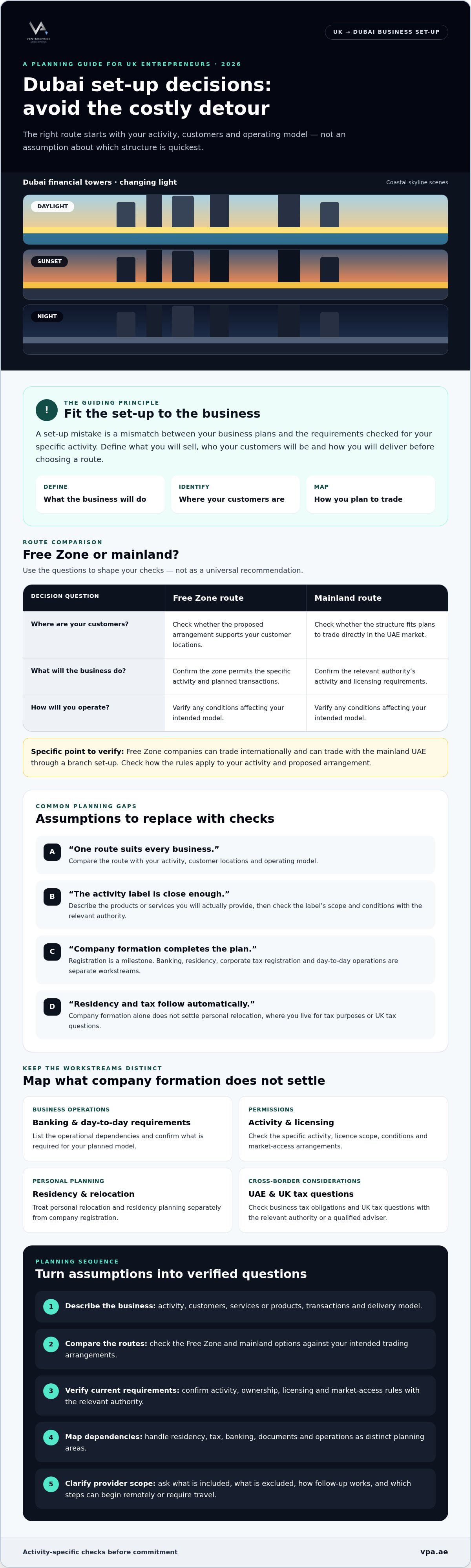
A setup mistake is a mismatch between your business plans and the requirements you’ve checked for your specific activity. Start by listing what you intend to sell, who your customers will be and how you’ll deliver. Dubai’s range of economic activity, outlined in Dubai's diversified economy, is one reason not to rely on a single, generic setup assumption.
Assuming every business can use the same setup route
Your intended activity, customer location and operating model should shape the route you investigate. For example, a consultancy serving overseas clients may have different practical considerations from a business planning to trade directly with customers in the UAE. That doesn’t establish which structure is permitted. Ownership, licensing and market-access rules can vary by activity, so verify the current requirements with the relevant authority before committing.
Treating company formation as the whole business plan
Registration is a milestone, not the entire operating plan. Treat banking, residency, corporate tax registration and day-to-day operations as separate workstreams. Company formation doesn’t by itself settle personal relocation or UK tax questions. Map who will handle each dependency, then confirm the requirements with the relevant authority or a qualified adviser.
Licensing details also deserve close attention. Read more about Dubai company setup and professional licence requirements before deciding what to apply for. A clear plan turns assumptions into questions you can verify before they lead to changes in your structure or process.
Choose the Dubai structure around your activity, customers and operating model
Free Zone and mainland setups are not interchangeable shortcuts. The right route depends on what the business will do, where its customers are and how it plans to trade. A label that sounds suitable on an application may not cover the work or transactions you have in mind.
Check the intended business activity before selecting a licence route, because it helps determine which permissions and conditions you need to verify. Use this comparison to frame your questions, not as a universal recommendation:
Match the licence activity to the work the business will actually do
Before applying, write down the products or services you’ll provide, who will buy them and how each transaction will work. A consultancy, for example, should describe the services it will actually deliver rather than select a convenient activity label based on its name alone. Check the label’s scope and conditions with the relevant authority.
Check market access instead of relying on blanket claims
Claims such as “this route works for every business” don’t replace activity-specific checks. Free Zone companies can trade internationally and can trade with the mainland UAE through a branch setup, but you should still verify how the rules apply to your activity and proposed arrangement. For broader context, review this Dubai company setup guide, then confirm your own requirements before committing. This review helps address the common mistakes UK entrepreneurs make in Dubai without assuming one route suits every plan.
Avoid Dubai setup mistakes by checking residency, tax and practical dependencies
Company registration doesn’t settle where you personally live for tax purposes, what tax obligations apply to the business or what you’ll need to operate day to day. Treat these as connected planning questions, but assess each separately. This helps prevent the common mistakes UK entrepreneurs make in Dubai, especially assuming that formation automatically resolves personal residency or tax status.
Do not assume company formation changes personal residency or tax status
Your personal tax residence and your company’s obligations are distinct matters. The answer depends on your circumstances and current rules, so don’t infer a personal outcome from the location of a new company. Check current guidance with HMRC and the relevant UAE authorities, and seek qualified UK-UAE tax advice before making decisions about relocation, income or company arrangements.
Plan for requirements that happen after registration
Use this verification sequence to build a practical plan:
Residency: Establish whether you need a UAE residence process and verify current requirements. Owners do not need to live in Dubai full-time, but must enter the UAE at least once every 180 days to keep a residency visa valid.
Tax: Corporate tax has been introduced. Check the company’s registration and reporting position with the relevant authority or a qualified adviser, rather than assuming a particular tax treatment applies.
Banking: Confirm application requirements and documentation. Account approval isn’t guaranteed. Bank statements and buying property are not requirements to start a business, but check what a bank may ask for when you apply for an account.
Documents: Identify what must be prepared, submitted and kept up to date.
Operations: Plan for ongoing administration and the practical needs of delivering your services or products. There is no minimum annual turnover threshold required to start a business.
These workstreams may involve different steps and decision-makers. Company formation and visa processing can begin remotely, including electronic submission and processing. Travel is still needed for specified in-person steps, such as medical and biometrics registration. Check which steps apply to your case and confirm the process details before relying on them.
Keep banking, residency processing and ongoing administration on your plan after registration, rather than assuming they happen automatically or on a fixed timetable. For support with company formation and strategic planning, discuss your Dubai setup requirements.
Turn a Dubai setup plan into clear questions and verified next steps
Before appointing a formation specialist, check whether their support fits the full plan, not just the initial application. Clear answers help you identify the common mistakes UK entrepreneurs make in Dubai before assumptions become commitments.
What to ask before appointing a formation specialist
Scope: Which company formation and residency steps are included? Are services such as banking assistance or tax registration arranged separately?
Requirements: What documents will you need to provide, and what responsibilities remain with you?
Dependencies: Which steps rely on decisions or approvals from authorities or other organisations? What could change the process?
Communication: Who will update you, how will progress be explained and how can you raise a question or escalate an issue?
Follow-up: What support is available beyond registration, and what ongoing administration should you plan for?
Ventureprise Acquisitions supports company formation and residency processes. Initial stages can start remotely, while specified steps require travel. Support can also extend to banking assistance, tax registration and business growth consultancy. Review the company formation service and ask precisely what applies to your circumstances. Approvals, banking outcomes and timings depend on the relevant processes and organisations.
Build a decision brief before taking action
Put your plans on one page: describe the business activity, intended customers, ownership expectations, where you’ll operate and whether you anticipate relocating. Add open questions about licensing, residency, tax and banking, then identify which need confirmation from authorities or qualified advisers. This makes discussions more focused and helps you compare providers on scope, clarity and follow-through, rather than broad promises.
Once your brief is ready, discuss your Dubai setup plan and clarify the next questions to resolve.
Move forward with a plan built on verified details
The common mistakes UK entrepreneurs make in Dubai often start when assumptions stand in for checks. Define your activity and intended customers before choosing a setup route, then verify licensing, residency and tax questions against your circumstances. Company formation is a starting point, not a substitute for a wider operating plan.
A useful next step is to prepare a brief covering what your business will do, who it will serve and what you need to confirm. Ventureprise Acquisitions has UK roots and is based on the ground in Dubai. Initial company formation and visa-processing stages can begin remotely, while specified steps require travel. Support can also extend beyond formation, depending on your needs and the agreed scope.
Start with the questions that matter most to your plan. Discuss your Dubai business setup with the team and identify the next points to resolve.
Frequently Asked Questions
Is Dubai a good place for UK entrepreneurs to set up a business?
It can be, depending on your activity, customers, operating model and personal circumstances. Compare setup routes against your commercial plan rather than relying on broad claims about the market. Check current requirements for your intended activity, and get qualified advice on cross-border tax and residency questions before making decisions. A suitable structure should support how you plan to operate, not just make registration possible.
Can UK entrepreneurs set up a Dubai company without moving there?
Initial company formation and visa-processing stages can start remotely, but that doesn’t mean every step can be completed from the UK. Ask which documents, appointments and travel your specific case may require, and verify the current process. Owners do not have to live in Dubai full-time, but must enter the UAE at least once every 180 days to keep a residency visa valid. Treat business setup and any relocation decision as distinct workstreams.
Do UK entrepreneurs need a local partner to start a business in Dubai?
Not necessarily. 100% foreign ownership is permitted for many activities, particularly in Free Zones, but don’t assume the same rule applies to every activity or structure. Confirm the current ownership and licensing requirements for your proposed business with the relevant authority before applying. Check against the precise activity you intend to carry out, rather than relying on a general promise or another company’s experience.
What is the biggest mistake UK entrepreneurs make when setting up in Dubai?
One of the common mistakes UK entrepreneurs make in Dubai is selecting a setup route before defining the business activity, intended customers and operating needs. That can leave a mismatch between the licence and the work the company plans to do. Write down what you’ll offer, who you’ll serve and how you’ll trade, then verify activity permissions, market access, residency needs and ongoing obligations.
Should I get UK and UAE tax advice before setting up a Dubai company?
Yes. Seek qualified, case-specific advice before making decisions that could affect your personal or company tax position. Forming a Dubai company doesn’t, by itself, determine your personal tax residence or settle obligations in the UK or UAE. Ask an adviser to review your circumstances and check current guidance with the relevant authorities. Keep personal tax questions distinct from the company’s registration and reporting responsibilities.



Comments