

Managing UK and UAE Wealth Through Tax and Estate Planning
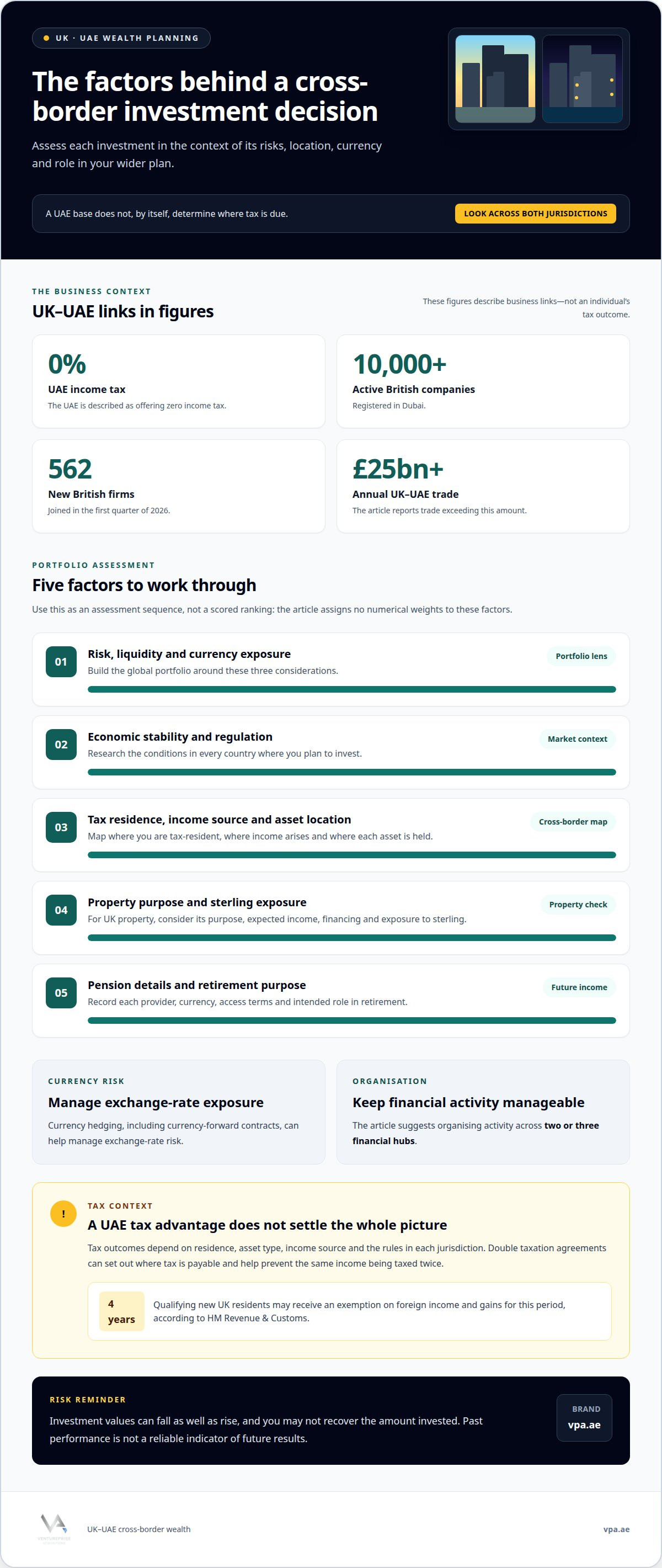
Managing cross-border wealth between the UK and UAE means coordinating tax obligations, estate planning and banking, rather than assuming that moving assets changes where tax is due. The UAE has zero income tax, but UK business owners there remain subject to UK taxes on worldwide income. Qualifying new UK residents may receive an exemption on foreign income and gains for four years, according to HM Revenue & Customs.
A UAE base can open up new opportunities, but it also raises practical questions: where are your assets held, how is income reported, and what happens to wealth across borders? Managing cross-border wealth between the UK and UAE starts with assessing both jurisdictions together, taking your tax position, family plans and financial arrangements into account.
This guide explains how UAE investments and private banking can fit into a cross-border strategy, which UK tax rules may apply, and why wills and estate structures need careful coordination. It gives you a framework for managing wealth across both countries and prioritising the decisions to address.
Table of Contents
UAE tax advantages and investment environment
Start by mapping where your income arises, where your assets are held and where you are tax-resident. This helps you distinguish the UAE’s investment opportunities from any continuing UK obligations.
UAE tax advantages
The UAE is described as offering zero income tax, an attraction for internationally mobile people. More than 10,000 active British companies are registered in Dubai, with 562 new British firms joining in the first quarter of 2026. These figures show the scale of business links, not a personal tax outcome. Assess the location of income, your residence and the rules applying to each asset before restructuring.
Foreign pensions and offshore investments
Expatriates in the UAE may need to take responsibility for planning their retirement. List each foreign pension and offshore investment, noting its provider, currency, access terms and intended role in retirement. Then assess how it fits your wider portfolio and UK tax position. For example, a pension intended to fund later living costs in the UK may require different currency planning from one intended for use abroad.
International investment diversification
Build a global portfolio around risk, liquidity and currency exposure. A UAE address alone does not make an investment suitable. Research the economic stability and regulations of each country where you plan to invest. Investment values can fall as well as rise, and you may not recover the amount invested. Past performance is not a reliable indicator of future results. Currency hedging, including currency-forward contracts, can help manage exchange-rate risk.
UK real estate may offer UAE-based investors an opportunity to invest in or develop property. Before committing assets, assess the property’s purpose, expected income, financing and exposure to sterling. Consider each property as part of your wider portfolio, not as a standalone investment.
UAE-based investors can also consider UK business and investment opportunities within the wider bilateral relationship. Annual UK-UAE trade exceeds £25 billion. Compare the purpose, risks and currency of each opportunity, then organise financial activity into manageable groups across two or three financial hubs.
Cross-border estate planning, wills and forced heirship
Assets in the UK and UAE may be subject to different inheritance frameworks. Coordinate your plan around where each asset is held and how you intend it to pass to beneficiaries.
Generational planning across borders
Start with an inventory of property, investments, business interests and pension entitlements in every jurisdiction. For each asset, record its intended beneficiary and purpose, such as supporting a child or funding retirement. This gives your family a practical picture of how wealth should pass between generations. Review the inventory when family circumstances or asset locations change, so it continues to reflect your intentions.
Tax and estate planning across jurisdictions
Tax and inheritance rules can intersect when an estate includes assets in more than one country. A will alone may not determine how every asset is distributed: some jurisdictions apply forced heirship rules that prescribe how assets are divided regardless of the will. Map each asset’s location and ownership, then consider how local rules could affect your intended transfer. This can help identify conflicts before you put documents in place.
Cross-border succession planning
If someone dies in the UAE without a Will, local law determines who inherits their assets and in what proportions. A will covering assets across jurisdictions should align with other estate documents and comply with local laws. Do not assume that one will provides a complete solution in every country. Instead, list each asset, identify the relevant jurisdiction and ensure your succession arrangements work together.
Include foreign pensions in your succession review. Note each provider, the available beneficiary instructions and the pension’s role in retirement income. For example, if a pension is intended to support a surviving family member, consider it alongside other assets and the wider estate plan. Coordinating these details gives beneficiaries a clearer understanding of how retirement resources and other wealth are intended to pass.
International tax obligations and double taxation agreements
Tax outcomes depend on residence, asset type, income source and the rules in each jurisdiction. Double taxation agreements can set out where tax is payable and help prevent the same income being taxed twice. When managing cross-border wealth between the UK and UAE, map these factors before changing ownership or moving assets. Offshore companies, trusts and investment structures can also add tax, reporting and compliance complexity if their treatment differs across jurisdictions.
UK tax changes for mobile people
The UK’s current non-domicile tax rules were due to be abolished from 6 April 2025 and replaced by a residence-based regime. Qualifying new UK residents may receive an exemption from tax on foreign income and gains for four years, according to HM Revenue & Customs. Individuals should map residence dates, foreign income and gains to the relevant tax years, then organise records to support their position. This timeline is a practical starting point for managing cross-border wealth in the UK and UAE.
Tax treatment of UK and UAE assets
For UK and UAE investments, rental income and capital gains, first identify your tax residence, where the income arises and which domestic rules apply. A double taxation agreement can help determine taxing rights and address overlap, but it does not make every asset tax-free. A UK business owner in the UAE remains subject to UK taxes on worldwide income, so the location of an asset alone does not settle its tax treatment.
Coordinate wealth across accounts, investments and entities with a clear asset register. For each holding, record the owner, jurisdiction, income type and relevant reporting obligations. Some countries require foreign-asset reporting or compliance with the Common Reporting Standard (CRS) or Foreign Account Tax Compliance Act (FATCA). Offshore structures may create additional risk if ownership, reporting and tax treatment are not aligned across countries.
International payments and banking can involve anti-money laundering (AML) and Know Your Customer (KYC) obligations in the other jurisdiction. Keep transaction records and ownership documents organised, especially for cross-border payments or transactions involving a company or trust. Independent tax and legal advice can help you consider treaty terms, structural risks and reporting duties together, rather than treating each account or investment as a separate decision.
What UK tax rules apply to UK residents with wealth or income in the UAE?
UK tax residence is central to how income and gains from abroad are treated. UK business owners in the UAE remain subject to UK taxes on worldwide income. Start by listing each income source, asset and ownership structure, then separate UK and UAE activity. This gives you a practical map of the tax questions to resolve.
For example, record business income, investment returns and rental receipts separately, along with the country where each arises. A UAE account or company does not, by itself, mean that income falls outside UK tax. Match each item to the relevant tax year and retain supporting records, including statements and ownership documents.
The UK’s non-domicile tax rules were abolished from 6 April 2025 and replaced by a residence-based regime. Qualifying new UK residents may receive an exemption from tax on foreign income and gains for four years. After that period, their foreign income and gains are taxed like those of any long-term UK resident, regardless of previous domicile.
Create a timeline of residence dates and foreign income to identify where the four-year period applies. Record when income arose, when gains were realised and whether the qualifying exemption is relevant. This helps distinguish income arising during the exemption from income arising afterwards, rather than treating all offshore assets alike.
Consider estate planning alongside income tax decisions. UK tax changes include changes to the inheritance tax treatment of certain trust structures, including excluded property trusts. If your wealth spans jurisdictions, map the trust’s assets, beneficiaries and intended role in succession. Consider these details alongside the inheritance rules that may affect your estate.
Use an asset schedule to bring together residence, income, ownership and trust information before restructuring. For tailored support with private client wealth structuring, take these records into a coordinated planning discussion.
Ventureprise Acquisitions: Setting Up A Company In Dubai: 6 Myths That Will Hold You Back
Ventureprise Acquisitions helps entrepreneurs connect Dubai company formation with strategic planning and longer-term wealth considerations. Its support can be useful when you are assessing a commercial presence in Dubai alongside UK assets, income or family succession priorities.
Its Setting Up A Company In Dubai: 6 Myths That Will Hold You Back addresses common assumptions around entering the Dubai market. Company Formation and Strategic Planning can help shape the business plan, while Private Clients Foundations amd Trustss supports consideration of future wealth structures. Together, these areas help bring business decisions and private wealth planning into a more coordinated view.
Before taking the next step, prepare a clear outline of your objectives, assets and intended business activities. This gives the discussion a practical focus. Contact Ventureprise Acquisitions to discuss your plans.
Make your next move with a coordinated plan
Turn your cross-border strategy into a working plan by setting priorities for your assets, business interests and family’s future. Managing cross-border wealth in the UK and UAE requires decisions that fit together, not isolated choices made in response to each new tax or investment question. Define what you want your wealth to achieve, then identify the structures and business steps that support those aims.
Ventureprise Acquisitions can support that process through Company Formation and Strategic Planning. Its Setting Up A Company In Dubai: 6 Myths That Will Hold You Back can help you approach the Dubai market with a more informed perspective. These offerings provide a practical next step when you’re connecting a potential business presence with your wider plans.
Start a focused discussion about your objectives and the decisions ahead. Contact Ventureprise Acquisitions to explore your next steps with confidence.
Frequently Asked Questions
How does the UK statutory residence test determine tax residence when moving between the UK and UAE?
The statutory residence test assesses whether you are UK tax-resident for a particular tax year. If you are moving from the UK to the UAE, keep a travel calendar and records of UK workdays, homes and significant personal connections. Retain evidence of departure and return dates, and review each tax year separately. A UAE residence permit alone does not determine your UK tax residence.
What does the UK-UAE double taxation agreement cover, and how can taxpayers claim relief?
A double taxation agreement sets out where particular income may be taxed and can help prevent the same income being taxed in both countries. To assess possible relief, identify the income, where it arose and any tax paid, then compare the treaty provisions with your tax filings in each country. Keep supporting statements and calculations together. The relevant relief depends on the income and your circumstances.
What are UAE personal income tax, corporate tax and inheritance tax rules for individuals?
The UAE is described as offering zero personal income tax. Corporate tax is a separate consideration for businesses, so distinguish personal income and assets from company activities. For inheritance, consider how local law may determine who receives UAE-held assets and in what proportions if someone dies without a Will. These are separate issues, not a single tax rule.
How do UK and UAE inheritance, succession and probate rules differ for expatriates?
For expatriates, the law applying to assets can depend on where they are located. If someone dies in the UAE without a Will, local law determines who inherits their assets and in what proportions. If your family has holdings in the UK and UAE, create an asset-by-asset schedule and coordinate the intended succession arrangements across both jurisdictions, rather than relying on one document in isolation.
How can UK pensions and retirement accounts be managed after moving to the UAE?
Keep each UK pension provider informed of your current contact and payment details. Retain statements showing benefits, nominated beneficiaries and payment currency. Before drawing income, consider how withdrawals fit your UK tax position and retirement spending in the UAE. For example, if you expect to spend in dirhams, plan for exchange-rate exposure alongside the timing and currency of pension payments.
What are the UK and UAE reporting requirements for overseas accounts, assets and trusts?
Reporting duties depend on the countries involved and the type of account or structure. Some jurisdictions require foreign-asset reporting or compliance with the Common Reporting Standard (CRS) or Foreign Account Tax Compliance Act (FATCA). Keep an inventory showing each account’s owner, location, income and related trust interests. Organise the documents needed for anti-money laundering and Know Your Customer checks on cross-border banking activity.



Comments