
_svg.png)
Setting Up a Holding Company in Dubai: A Practical 2026 Guide
What you plan to own matters as much as the licence when choosing a Dubai holding structure. Setting up a holding company in Dubai is a strategic decision, not simply an application: your assets, activities, ownership and expansion plans all shape the choices ahead. Before you begin, get clear on what the company will hold, whether a Free Zone or mainland structure fits, and what tax and compliance responsibilities may follow.
This guide will help you define the purpose of your proposed structure, compare the key jurisdictional choices and plan the practical steps before committing. You’ll also see why a holding company isn’t a separate UAE corporate tax category, and why Free Zone tax treatment isn’t automatic. From identifying intended holdings and operations to preparing for formation and ongoing obligations, we’ll set out the decisions to make and the rules that need current, activity-specific advice. With the right groundwork, you can build a structure around how your business will actually operate.
Table of Contents
What Does Setting Up a Holding Company in Dubai Actually Mean?
A holding company primarily owns shares in other companies or other assets permitted by its licensed activities and jurisdiction. In practice, holding company describes an ownership role, not a promise of a particular legal or tax outcome. Setting up a holding company in Dubai can help organise ownership, hold investments and provide a clearer framework for group governance. The structure still needs to match what the company will own and do.
An operating company trades and delivers; a holding company owns interests and helps organise how those businesses are governed. This distinction can clarify responsibilities across a group, but the holding-company label alone doesn’t guarantee tax savings, asset protection or access to a market. Tax treatment depends on the company’s income and circumstances, while ownership and permitted activities depend on current jurisdiction-specific rules.
What can a Dubai holding company own or control?
Shares in subsidiaries are a common holding-company asset. Other assets may also be permitted, subject to the relevant activity and jurisdiction rules. The company can provide an ownership layer for a group and support oversight of its investments, but that is different from carrying out day-to-day trading. If the proposed company will also sell goods or services, assess those activities separately rather than assuming a holding structure covers them.
When does a holding structure make commercial sense?
Consider this structure if you own several ventures, plan to hold investments through a company, or expect to expand into multiple markets. For example, placing separate operating businesses under a parent company may make ownership and group governance clearer. But another entity also brings setup and ongoing compliance considerations. Start by defining the problem: are you organising existing ownership, holding investments or planning expansion? Your answer gives you a practical basis for comparing structures.
How Should You Compare Dubai Holding Company Structures?
Choose the jurisdiction based on what the company will own and do, not a headline claim about tax or ownership. Setting up a holding company in Dubai means aligning its permitted activities with the assets, governance role and operations you have in mind. Free Zone and mainland structures can each be relevant, but neither is automatically the right fit.
Which questions shape the decision?
Map the company’s assets, owners, intended activities and operational footprint before selecting a jurisdiction. International trade and activity with mainland UAE customers can involve different permissions or structures, so assess current rules for each intended activity. Use the table as a decision framework, then consider how the rules apply to your specific jurisdiction and plans.
How should tax and compliance affect the comparison?
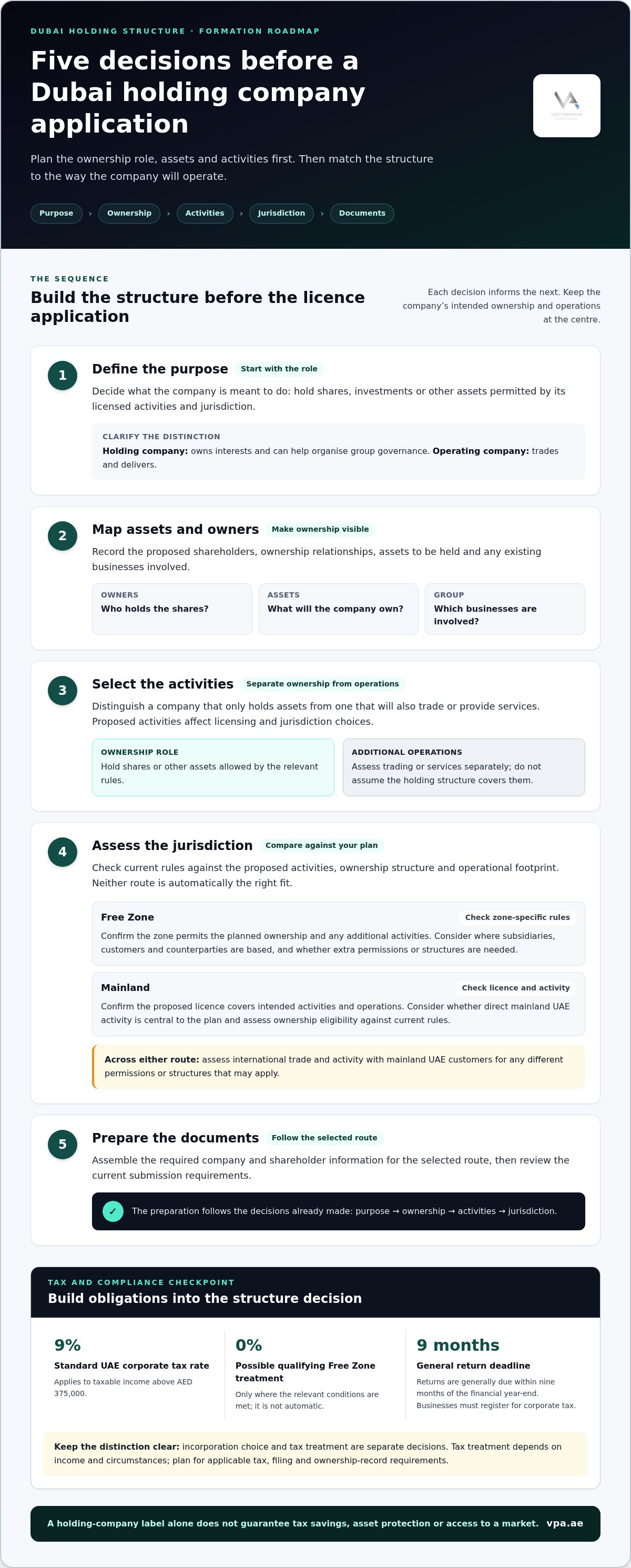
Incorporation choice and tax treatment are separate decisions. The standard UAE corporate tax rate is 9% on taxable income above AED 375,000; qualifying Free Zone income may receive 0% treatment only if the relevant conditions are met. Businesses must register for corporate tax, and returns are generally due within nine months of the financial year-end. Build current professional advice into your plan for the entity, income and activities you intend to have.
To turn these considerations into a formation plan, discuss your Dubai company formation plans.
What Are the Practical Steps to Set Up a Holding Company in Dubai?
Make the structural decisions before starting the licence application. Setting up a holding company in Dubai works best as a planned sequence, with each step connecting the company’s purpose to its ownership, activities and compliance needs.
Define the purpose. Decide whether the entity will hold shares, investments or other permitted assets, and what ownership or governance role it should play.
Map assets and owners. Record the proposed shareholders, ownership relationships, assets to be held and any existing businesses involved.
Select activities. Distinguish a company that only holds assets from one that will also trade or provide services. Proposed activities affect licensing and jurisdiction choices.
Assess the jurisdiction. Compare the intended activities and ownership structure with current Free Zone or mainland rules, including any cross-jurisdiction operations.
Prepare documents. Assemble the required company and shareholder information for the selected route, then review the current submission requirements.
Check activity, ownership and compliance requirements before submitting for a licence, not after.
What should founders prepare before applying?
Start with a clear record of shareholders, ownership links, proposed activities and assets. Note whether the company will only hold assets or also conduct operations. You do not need to show personal or business bank statements to start a business, and you do not need to buy property. Prepare the document checklist for your chosen jurisdiction and activity so you know what information the application requires.
What happens after initial company formation?
Company formation is distinct from subsequent steps such as residency processing, banking assistance and corporate tax registration. Electronic submission and signatures can allow initial formation processing to begin remotely, without travelling at that stage. If you pursue UAE residency, you must enter the UAE at least once every 180 days to keep the residency visa valid; include this requirement in your planning.
Map your structure and next steps with Ventureprise’s Dubai company formation team.
How Can Ventureprise Help You Move from Structure to Setup?
A sound holding structure starts with clear decisions, then moves into formation. Ventureprise Acquisitions provides plain-English guidance to connect your ownership goals and planned activities with a suitable jurisdiction and a practical setup sequence. With UK roots and a physical presence in Dubai, the firm supports international entrepreneurs as they plan their next move.
Initial formation processing can begin remotely through electronic submission and signatures, so you don’t need to travel for that stage. Explore Dubai company formation support to see how the formation process can fit into your wider plans. Ventureprise also provides residency support, a separate but related process that can be planned alongside company formation.
What support can help keep setup decisions joined up?
Formation establishes the company, while residency processing addresses a different set of steps. Ventureprise can also assist with banking setup and corporate tax registration, helping you plan for these practical requirements alongside formation. Each remains distinct: banking assistance doesn’t promise account approval, and registration support doesn’t guarantee a particular tax outcome.
What should your first planning conversation establish?
Bring a clear outline of the assets the company may hold, the ownership relationships you want to establish, its proposed activities and the markets where the wider group intends to operate. These details help shape the formation plan and identify questions that need current, jurisdiction-specific advice. If your goal includes establishing a broader commercial presence in Dubai, consider how that expansion fits with the holding company’s role rather than treating the licence as the whole strategy.
Ready to turn your plan into defined next steps? Talk through your Dubai holding company setup.
Turn Your Holding Company Plan into a Clear Next Step
A strong holding structure begins with a defined purpose. Identify what the company will own, how its activities fit the chosen jurisdiction and what governance role it needs to play. That groundwork makes setting up a holding company in Dubai a strategic decision, rather than simply a licence application. Tax treatment and compliance also depend on the company’s circumstances, so include current, activity-specific advice in your planning.
Ventureprise Acquisitions brings UK roots and a physical presence in Dubai, with a plain-English approach to connecting your objectives to the formation process. Initial company formation processing can begin remotely through electronic submission and signatures, so you can start without travelling for that initial stage.
Ready to define your next steps?Talk through your Dubai holding company setup and bring your ownership goals, proposed activities and expansion plans into focus. With a considered structure and a practical plan, you can move forward with greater clarity.
Frequently Asked Questions
What is a holding company in Dubai?
A holding company is an entity whose main purpose is to own shares or other permitted assets, rather than conduct day-to-day trading itself. Its precise activities and permissions depend on its licence and jurisdiction. Before setting up a holding company in Dubai, define its commercial purpose, then assess the current rules. The holding-company label alone doesn’t establish tax treatment or guarantee asset protection.
Can a foreigner own 100% of a Dubai holding company?
In many activities, particularly in Free Zones, 100% foreign ownership is permitted. This isn’t a blanket rule for every activity or structure, so don’t assume it applies automatically to your proposed company. Assess the current ownership rules for the specific activity and jurisdiction, then organise the shareholding accordingly. The right answer depends on how the company will be licensed and what it plans to do.
Do I need to move to Dubai to set up a holding company?
No, initial company formation and visa processing can begin remotely, and you don’t need to travel during those initial stages. Company formation and residency are separate matters, with requirements that can vary by individual circumstances. If you obtain a UAE residency visa, you must enter the UAE at least once every 180 days to keep it valid. Include current visa rules in your planning.
Do I need to buy property or show bank statements to set up a Dubai company?
No, you do not need to buy property or show personal or business bank statements to start a business. Requirements can still vary with the proposed activity, jurisdiction and current procedures. Prepare a document checklist around your intended structure and review the requirements that apply before submitting an application.
Does a Dubai holding company automatically pay no corporate tax?
No, a holding-company structure doesn’t automatically remove corporate tax. The standard UAE rate is 9% on taxable income above AED 375,000, and businesses must register for corporate tax. Qualifying dividends and capital gains may benefit from the participation exemption, subject to conditions. Tax treatment depends on the company’s income and circumstances, so get current advice on registration, filing and applicable rules.


Comments